Fifty five years ago, a gardener from Bowen made an important decision about his work/life balance. He developed a passion for begonias and so began a lifelong project – the continuous improvement of rhizomatous begonias. In the process he became one of the foremost breeders of our time.
Bernard Yorke is a lawyer and cultivating begonias balanced his life. To this day, they bring him endless joy. As you might expect, from the outset the organised mind of a lawyer sought the definitive list of every Begonia species in cultivation in Australia. These would be the palette for his project. He asked Australia’s leading botanic gardens to help him answer this fundamental question. The response was startling. At the time, Australia’s National Begonia Inventory consisted of fewer than twenty species.
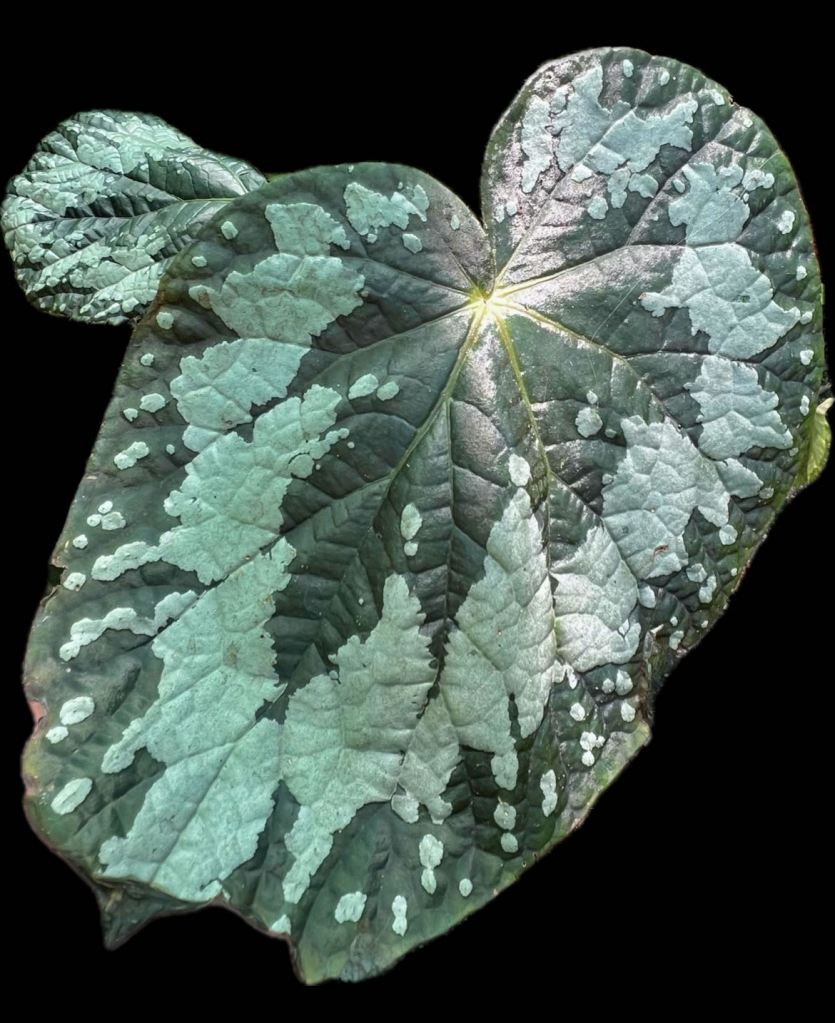
That’s not much of a gene pool considering Begonia is a very diverse genus. Eight hundred new species of Begonia have been described so far this century, it is the most rapidly growing genus on Earth. South East Asia is a diversity hot spot, with Vietnam featuring as a centre of new discoveries.
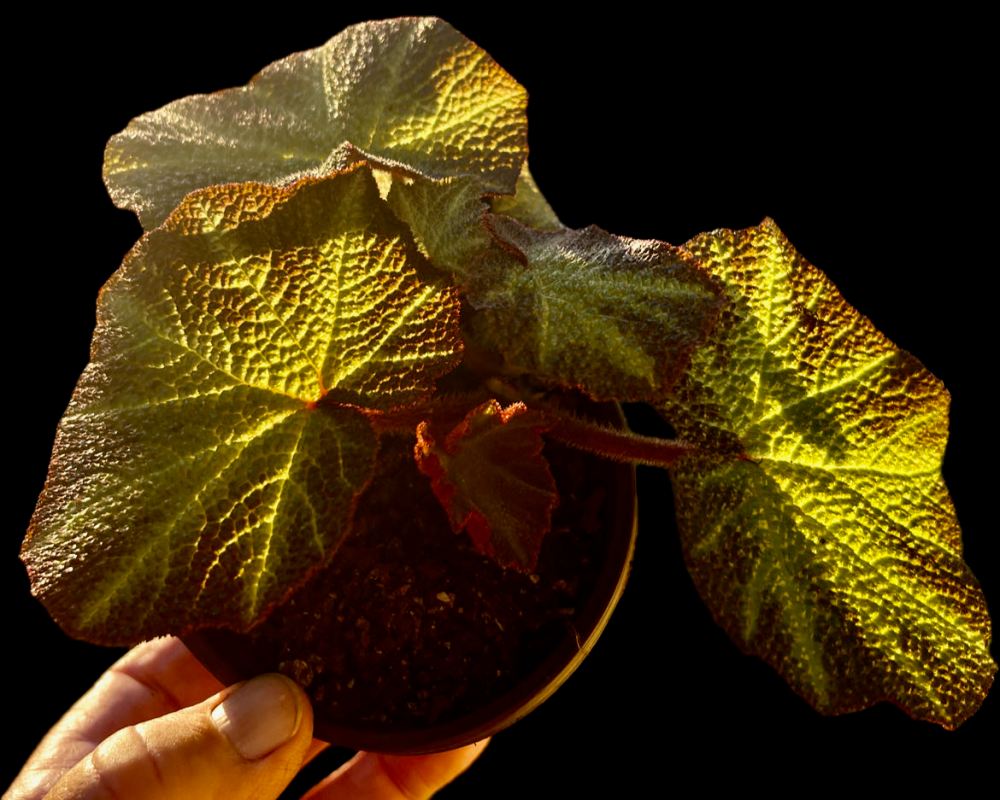
There are now 2,000 described species, but fifty years ago everyone looked to the USA for new and interesting Begonia hybrids and species. The American Begonia Society was and remains a world centre of cultivated begonias, an ideal source of breeding material. Bernard created the base of his collection by importing seed.
There’s a great range of begonias in flower size, shape and colour, and there’s equal variety in their foliage. They’re perennials, found worldwide in subtropical and tropical climates – except there are none native to Australia. The nearest grow in New Guinea.
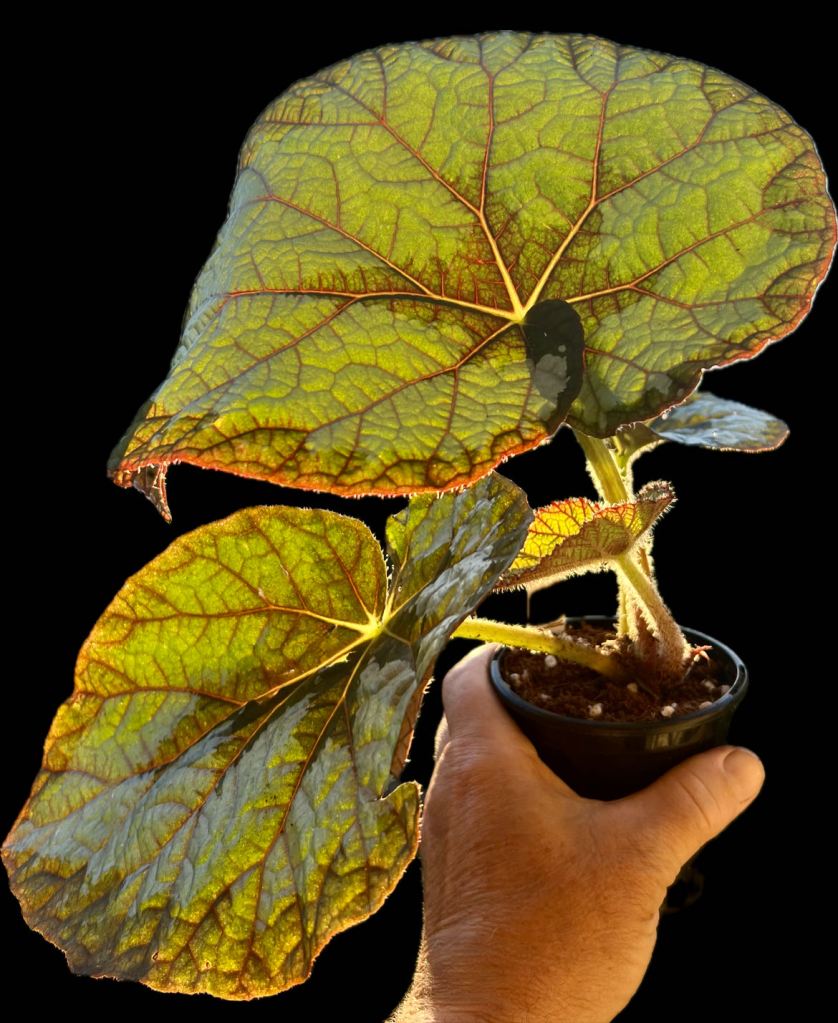
Some begonias grow like shrubs, some have cane-like, clumping growth, while others sprout luxuriant foliage from bulbs and rhizomes.
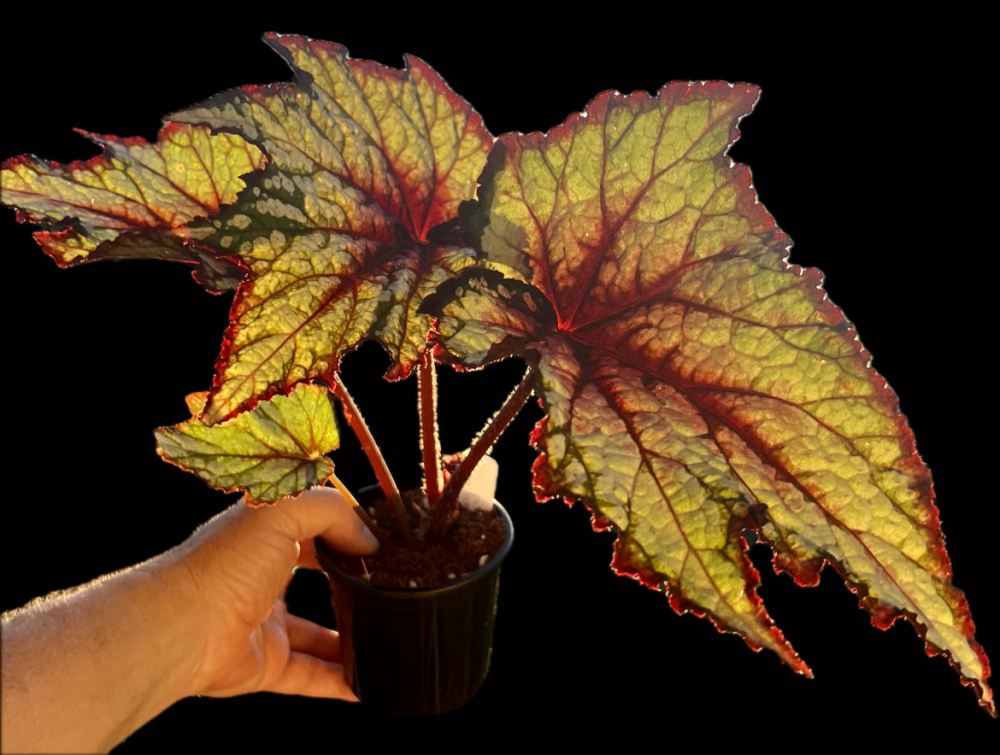
Of all these different types, it was the leafy rhizomatous begonias that wooed Bernard’s heart. Over the years, he has accumulated vital knowledge – he’s a repository of propagation tips as well as home bred hybrids. As he practised law, he honed techniques making cross pollination more successful, and learning how best to unlock and recombine their genetic potential. The resulting improved varieties have made his Queensland-bred begonias stand out amongst the world’s best. You could say this Begonia fan has put the fun into phenotype.
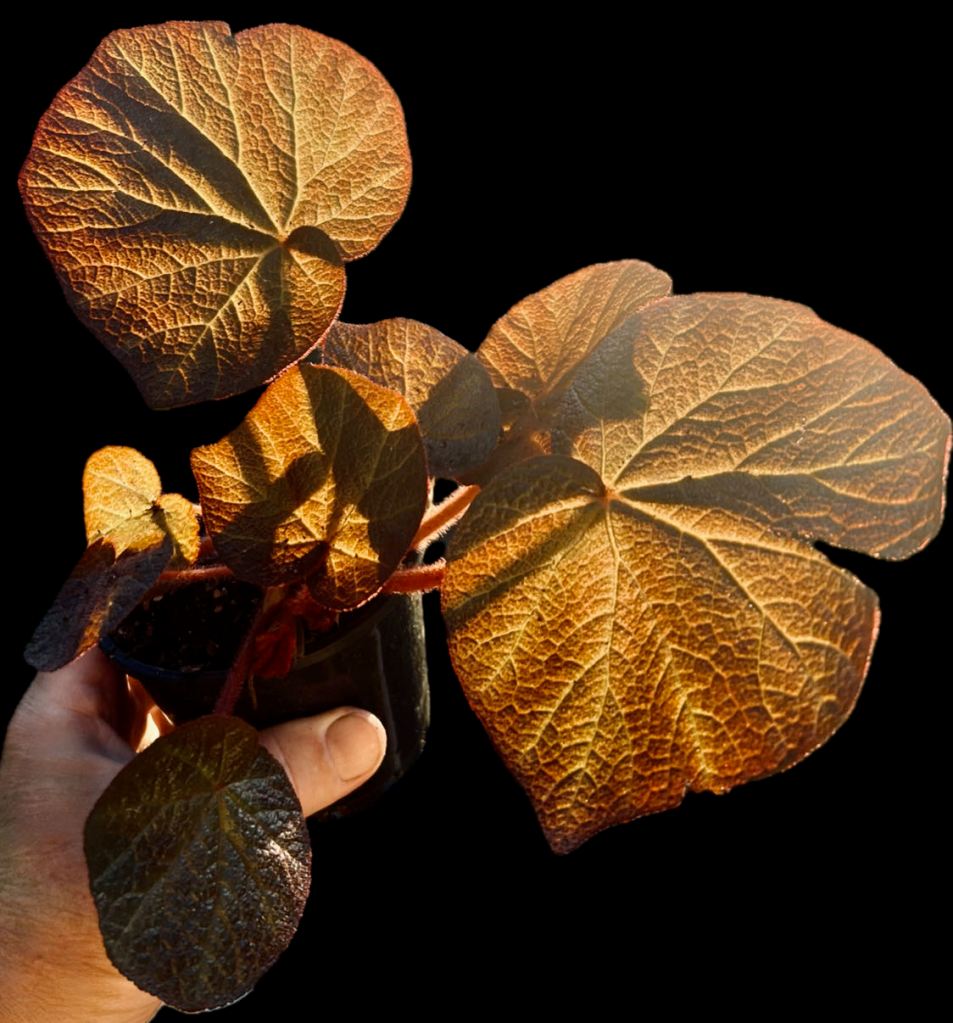
“Fifty years ago Australia envied USA Begonia hybrids”, Bernard says, “Now it’s the other way around”. His hybrid ‘Logan Prize’ is one of his most popular introductions into the USA and is now found countrywide. In fact, so many of Bernard’s begonias are prized in the USA, one recent garden show comprised entirely of hybrids he has produced in his garden in Logan City, SE Queensland.
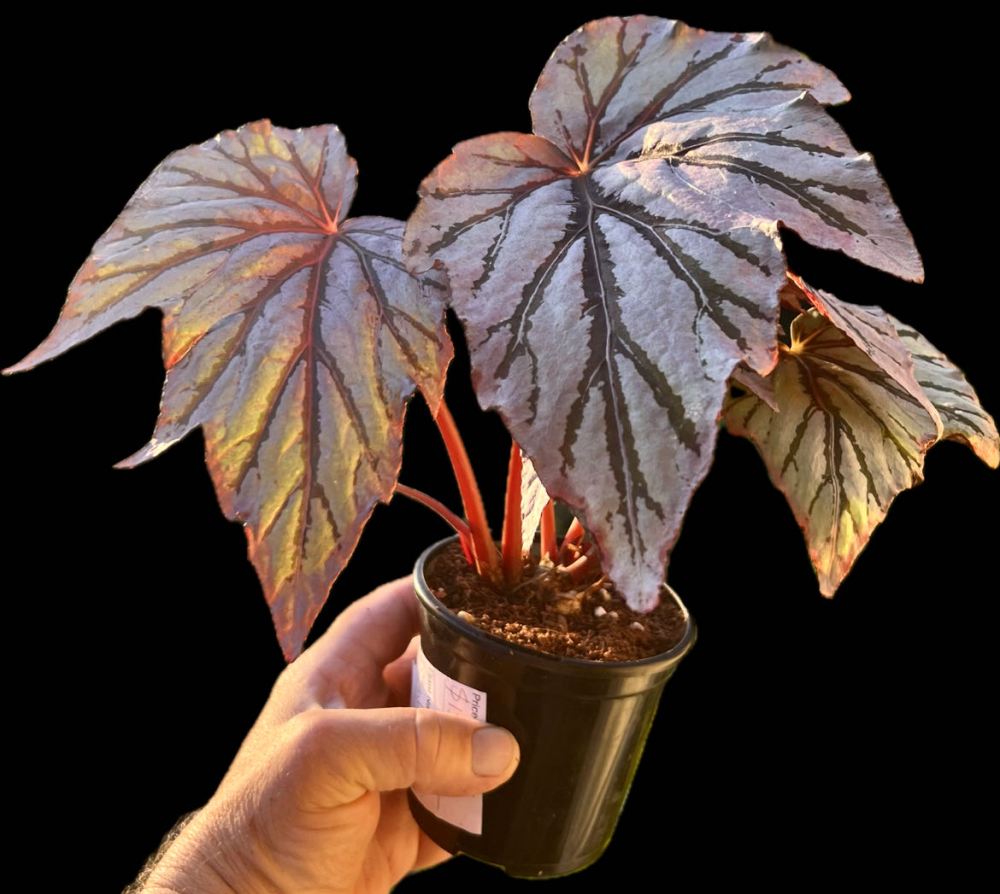
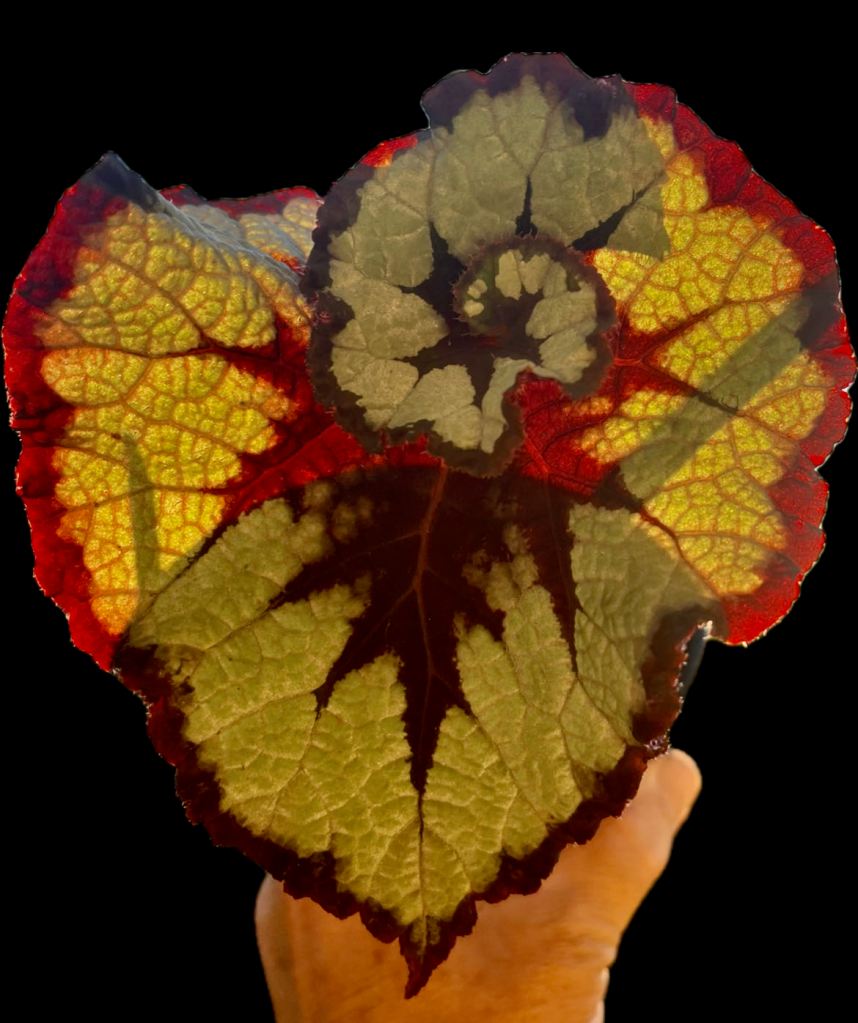
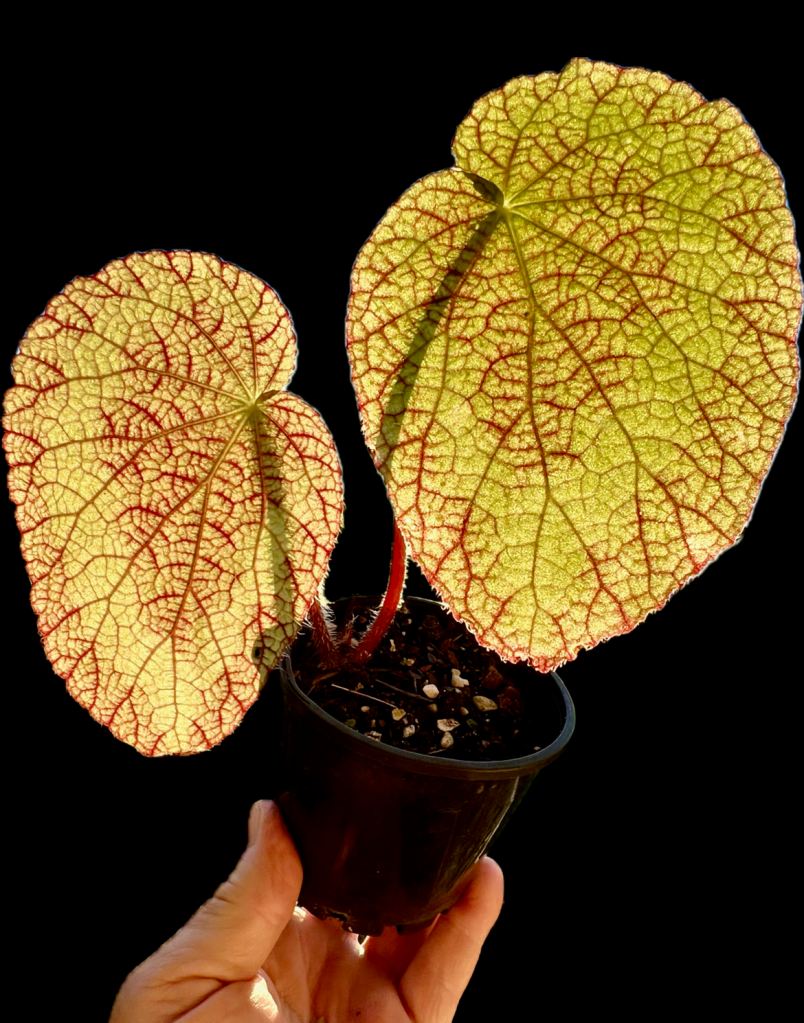
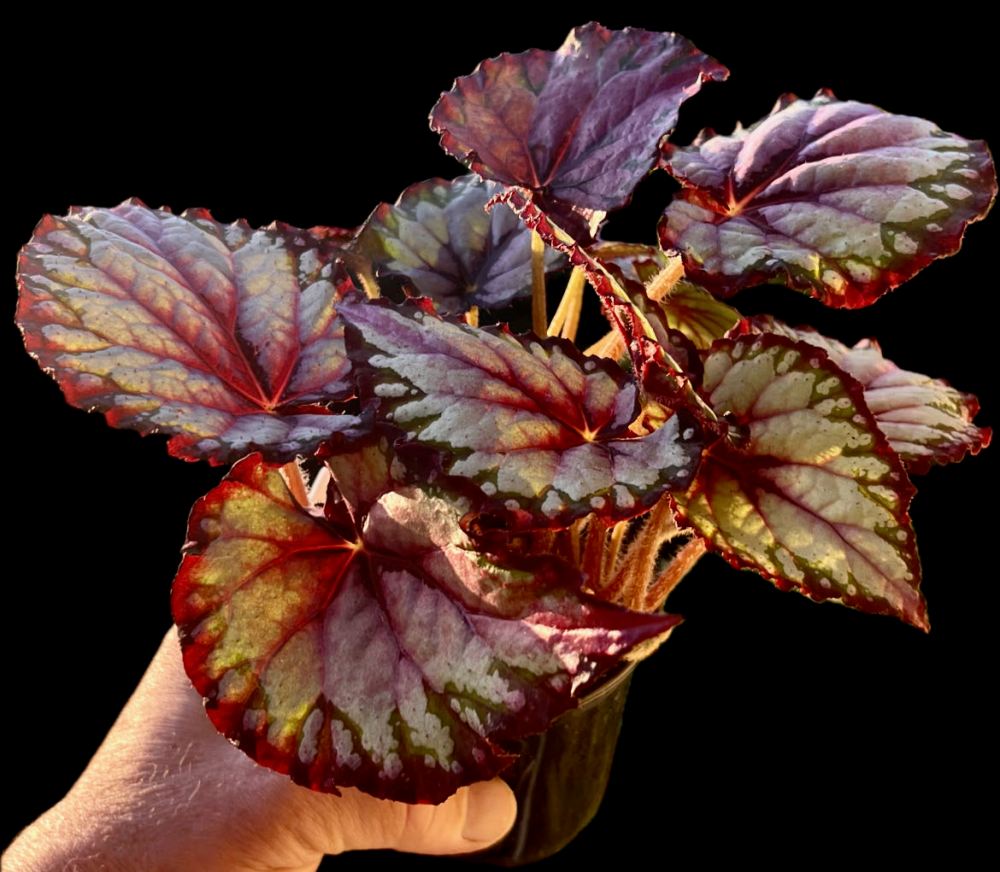
There’s not much I can add to this story, except to suggest you think about where you display rhizomatous begonias. From my images you can see that when they are backlit they look totally different, an effect I made even more vivid by removing the background clutter in the shots.
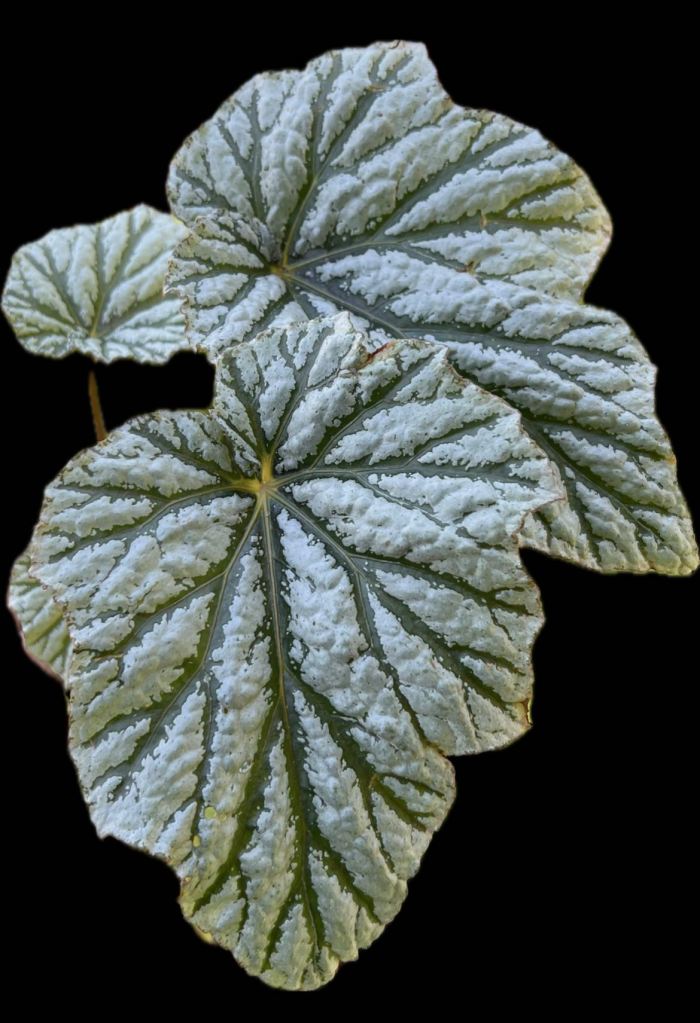
Collectors use shade houses for their begonias. As a houseplant, keep them well away from room heaters/ air conditioners. Place them on an east facing windowsill where they are protected from direct sunlight by net curtains, or a north facing window – set a metre back from the glass – and again screened from direct sunlight by net curtains. You’ll achieve a pleasing look and great growth.
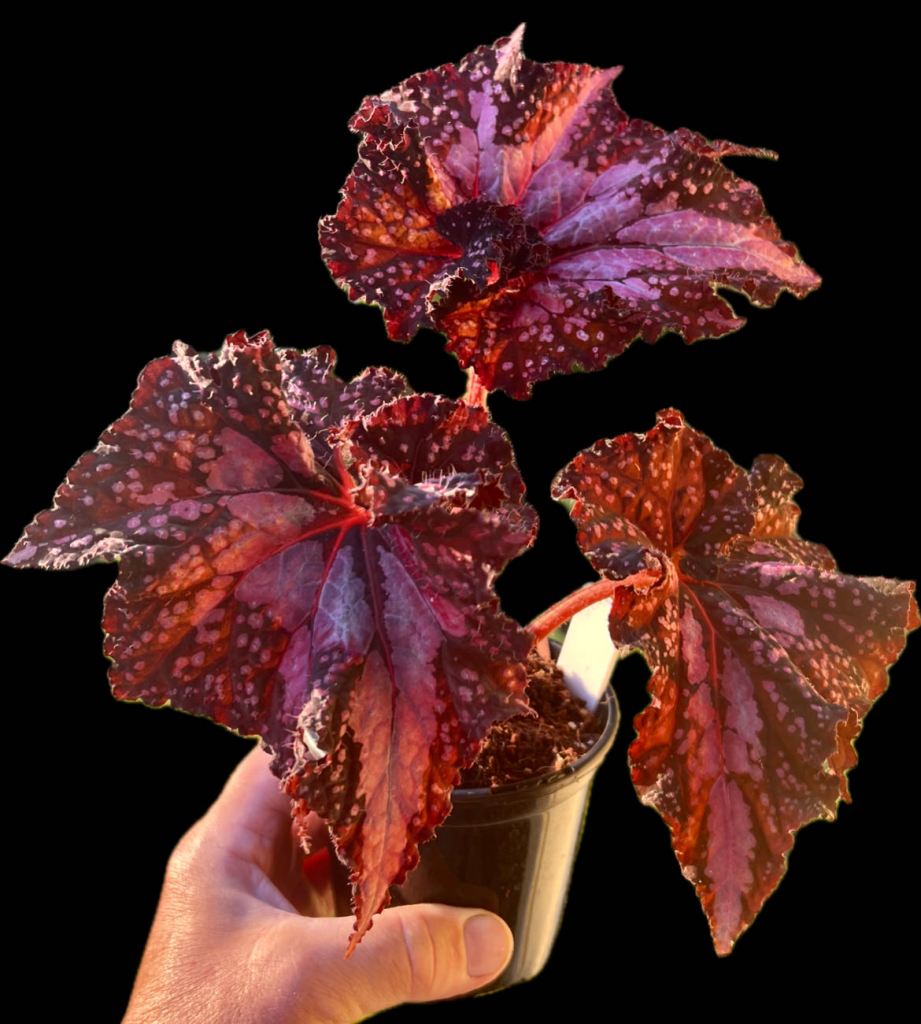
Always grow rhizomatous begonias in a lightweight, freely draining mix. I use equal parts of coir fibre, perlite and premium potting mix made by Rocky Point.
Never wet their foliage, this avoids damage by fungi/ bacteria. Always water from the bottom, they do best in plastic pots which sit in saucers, so you add water into the saucer. Allow the mix to go just dry before watering again. Nothing kills them faster than having them sit in constantly wet mix, especially in winter.
Begonias love fertiliser in small, regular doses, so add liquid seaweed to water during spring, summer and autumn.
There are always exceptions to this general rule, especially with such a diverse genus, but these exceptions are wild species usually found in specialist collections.
Certain species must have high humidity and warmth all year round and these too are species for collectors. There are special plastic domes to enclose these small-growing fussy species.
Growers worldwide now look to Australia for rhizomatous Begonia inspiration and to Bernard Yorke, a member of the Queensland Begonia Society, for new stock. A still unfolding Australian gardening story about a lifelong love for leaves.
Contact the Queensland Begonia Society for further information.
Jerry Coleby-Williams
Director, Seed Savers Network
May 2026


Thank you, Jerry. That was an eye-opener for me, the big new world of begonias, and Australian bred!
Fascinating! Thanks Jerry.